
Natural ant repellent: which methods really work, how to use them, and what to watch out for
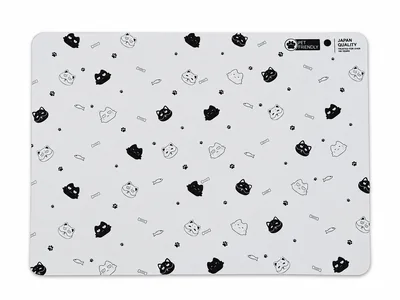 KAI67 anti-ant pad, large 30x42 cm฿149 · 1 pad · Order via LINE or fill in the form
Chat on LINE · ฿149
Written and reviewed by the KAI67 team, sellers of the 30x42 cm anti-ant pad (first lot received 7 Nov 2026) · See the real product photos and price · Updated 9 Nov 2026 · Order or ask on LINE @814ddrza
Swipe for the next topic · 28 topics
How does a natural ant repellent work?
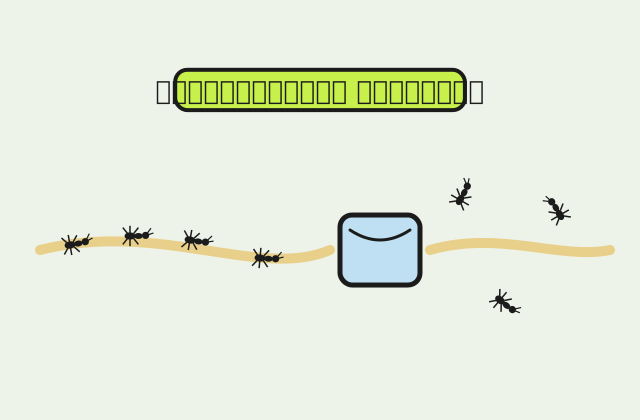
Most natural methods work in one of three ways. The first removes the scent trail ants leave on the floor, such as wiping with water and dish soap. The second masks the scent with a strong smell such as vinegar or lemon peel. The third makes it harder for ants to cross, such as a line of powder or a strip of water. None of the three kills ants in the nest, so ants can forage again once the smell fades or the line breaks.
Worker ants follow scent lines left by others. When a line disappears, ants wander looking for a new route, and this is when natural methods work best. But if food is still at the end, the wandering ants find it again and lay a new line before long. So natural methods have to go together with removing what the ants came for.
The upside is that you use things already at home, they cost little and contain no insecticide. The downside is that results vary from home to home by ant species, surface and humidity, and they need repeating regularly. Natural does not mean safe for everyone or every surface either, as each section explains.
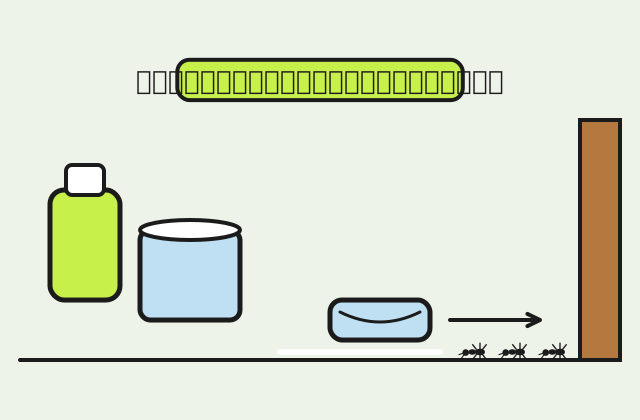
How do you wipe an ant trail with water and dish soap?
Mix a little dish soap into a bucket of water, dip a cloth and wring it out, then wipe along the ant route from where the ants gather all the way to the entry point, such as a door frame, a window track or the floor-wall joint. Then wipe again with a cloth in plain water so no slippery residue remains. This removes both the scent trail and food residue, which makes it the best-value natural method.
What makes this fail is wiping only where you see ants and not the whole route. New ants follow the remaining scent back to the same spot. Follow the ant line to its end first, then wipe. If you do not yet know where ants come from, see how to track them in ants in the house.
Some people keep soapy water in a spray bottle to spray onto ant lines they see, which slows ants and breaks up the line, but always wipe up afterwards. Do not spray the floor and leave it, because the floor gets slippery and dried soap film collects dust.
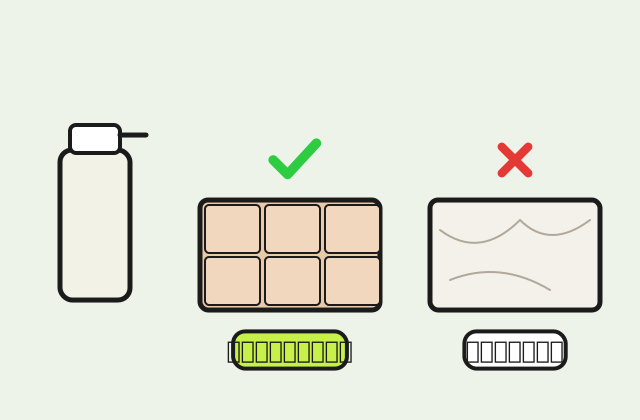
Does vinegar repel ants, and how should you use it?
Vinegar can mask the ant scent trail for a while. The usual way is mixing it with water in a spray bottle, spraying and wiping along ant routes, door frames and window frames. The sour smell fades quite fast, so it needs repeating. Some homes see ants go elsewhere, others see little effect, which is normal for scent-masking methods.
The catch is that the acid in vinegar can etch marble, granite and natural stone, leaving dull marks, as well as some grouts and finished wooden floors. Test a small hidden corner first, and never spray it onto food or food containers.
Vinegar does not destroy the nest. If you spray the entry but ants still come for the same food every day, go back and deal with the food first, for example moving sweet things into rubber-sealed containers or onto an anti-ant pad, and use vinegar only as a helper along entry points. How to wipe, which surfaces to avoid and what never to mix it with is in vinegar for ants.
Keep reading: 24 more sections
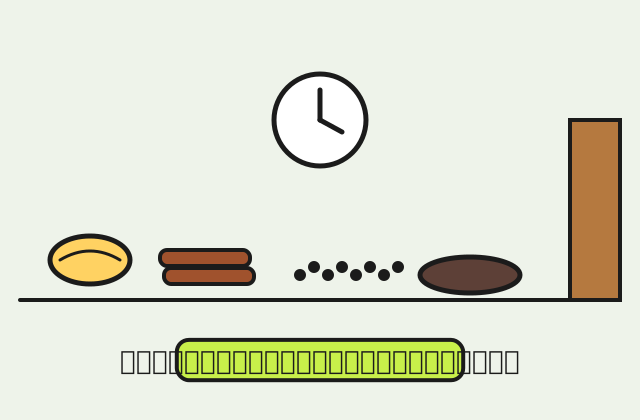
Do lemon, cinnamon, pepper and coffee grounds really repel ants?
Strong-smelling kitchen items such as lemon peel, cinnamon, pepper, cloves and coffee grounds are widely shared as ant repellents. What people report varies a lot, and there is no confirmed evidence that any of them works on every ant species. What can be said is that they may mask the scent trail for a while, so they suit entry points ants use, not being placed on food.
A downside people rarely mention is that fresh or damp items rot or go mouldy. Lemon peel left for a few days dries out or grows mould, damp coffee grounds go mouldy easily and stain floors, and cinnamon and pepper powder stick to feet and pet fur. Replace them regularly and sweep up completely before putting down a new batch.
If you try them, try one item at a time at one entry point and watch for 3 days. Do not put several out at once around the house, or you will not know what worked and the house will be scattered with spice.
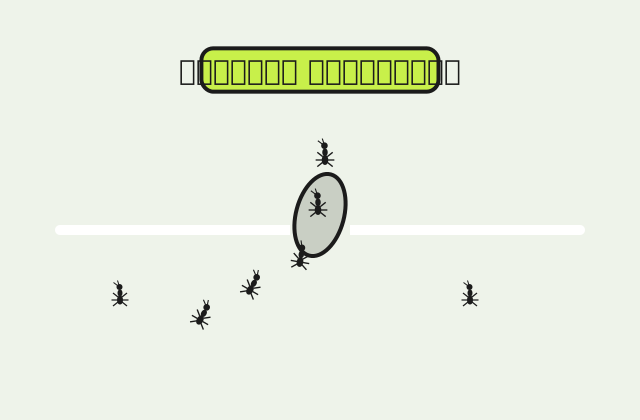
Can plain chalk, powder or salt block ants?
A line of plain chalk, talc or salt may make ants hesitate or go another way for a while, but the line breaks very easily when stepped on, wiped, blown or dampened. Once a single section breaks, the whole line of ants gets through. This suits only spots nobody walks past, such as the outside edge of the back door, and the line needs checking every day.
Tell the difference between plain blackboard chalk and ant chalk sold in shops. Many ant chalks contain insecticide and are not a natural method. They must be used as labelled, never near food, pet bowls or where babies crawl, because they look so much like ordinary chalk that children may put them in their mouths.
Salt absorbs moisture, so on damp floors it goes sticky and leaves marks, and sprinkled near plants or pots it can make the soil salty. Powder floats and can be breathed in, so do not sprinkle it in bedrooms or rooms with young children.
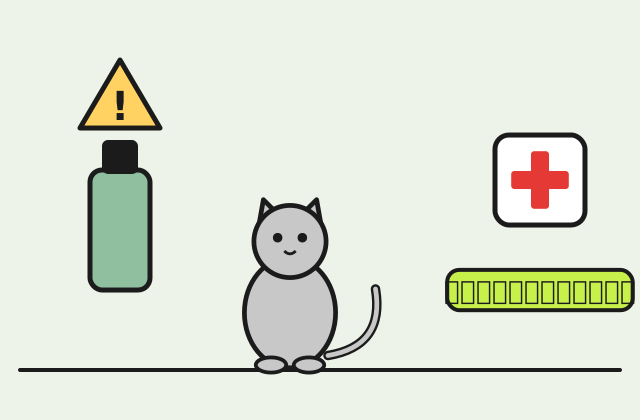
Are essential oils for ants safe with cats and dogs?
Do not assume a natural ant repellent is safe for pets because it is natural. Many essential oils, such as tea tree, eucalyptus, peppermint and citrus oils, are reported to be harmful to cats. Cats are more sensitive to some compounds than people, and are exposed by breathing, by stepping in it and licking their paws, and by licking their fur. Homes with cats should ask a vet before using any essential oil.
Dogs can be affected by some essential oils too, especially when used strong, sprayed where the dog lies, or licked. If a pet drools heavily, vomits, wobbles, becomes drowsy or breathes abnormally after essential oils are used at home, open the windows, take the pet away from the area and see a vet.
For the pet feeding corner, the safer route is no scent or product at all: wipe the ant trail with soapy water and then plain water, and protect bowls with an anti-ant pad or a moat bowl. Details are in ants in cat food.
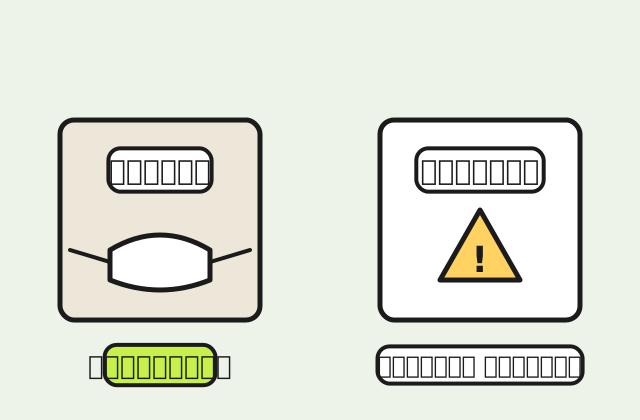
Do diatomaceous earth and borax count as natural methods?
Diatomaceous earth is a powder made from fossilised diatoms with sharp edges, dusted thinly in dry spots ants walk through. Background on the material is in the Wikipedia article on diatomaceous earth. For home use, choose a type labelled for household use, not pool-filter grade. The powder is very fine and should not be breathed in, and it only works in dry spots, because it stops working when wet.
Borax powder, which people mix with sugar to make homemade bait, is not a natural method. Borax is a chemical that is harmful if swallowed, for both children and pets, and sweet homemade bait tempts children and animals to eat it. If you want ant bait, use ready-made enclosed bait stations with a label and registration number, used only as the label says.
Neither diatomaceous earth nor any bait belongs on food prep counters, in pet bowls or on the bed. Use them along ant routes on the floor where people and animals cannot reach.
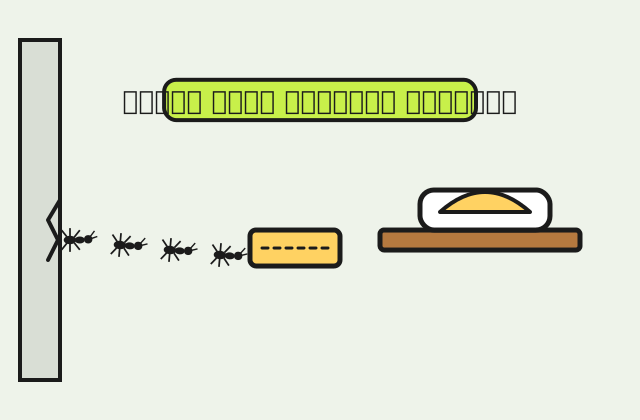
How do you get rid of black ants in the house naturally?
Black ants walking in lines indoors are dealt with on the same principle as other ants: find the entry, wipe the route, seal the gap and cut off the food they came for. Medium-sized black ants usually come from outside, through door gaps, window frames or the floor-wall joint. If you can seal the entry, a natural ant repellent such as wiping the trail and using scents at the entry works much better.
For items black ants keep coming to, such as snack plates, sugar jars or pet bowls, put them on an anti-ant pad 5 cm from the edge. The 30x42 cm pad costs ฿149, has no smell and needs nothing added. Why ants will not cross the pad is explained in what is an anti-ant pad.
Tiny black ants in long lines that get into every gap tend to come back faster than big ones. If they return within a day every time you wipe the trail, the nest is very close, maybe in a wall or under the floor, and natural methods alone will not be enough.
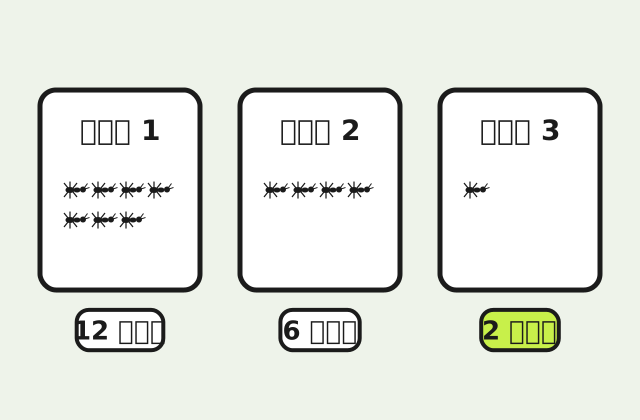
How do you test a natural method yourself and know it works?
Test properly by changing one thing at a time. Pick one spot where ants come regularly and photograph the ant line at the same time each day before starting. Then use just one method, such as wiping vinegar at the entry, and photograph at the same time for another 3 days. Count the ants or look at the length of the line. If the line is clearly shorter, that method helps in your home.
Do not change anything else during the test. If you also move the food away, you will not know why the ants left. Start by wiping the trail and putting food away as your baseline, then test extra methods one by one. A short note on your phone is enough.
Results vary by ant species and season. In the rainy season ants move nests more and come indoors more, so a method that worked in the dry season may seem not to work in the wet. If results change, test again instead of deciding the method is useless.
When is a natural approach not enough, and what should you switch to?
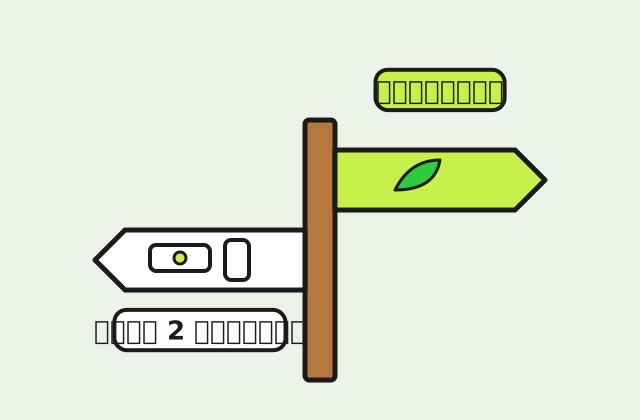
If you have wiped the trails, stored food away, sealed gaps and tried natural methods, but ants still come every day for more than 2 weeks, the nest is close or inside the house. It is time to deal with the nest, for example with enclosed bait stations along the ant route on the floor as the label says, or a pest control company, while still protecting food with barriers such as an anti-ant pad.
Another case where you should not rely on natural methods is biting ants, such as fire ants around the house or in the garden, because people or pets may be bitten again. Homes where someone is allergic to ant stings should have an expert deal with it from the start rather than testing for weeks.
Switching to bait does not mean dropping every natural ant repellent, but stop wiping and stop using strong scents right where you place the bait, or ants will not find it. Elsewhere in the house you can keep wiping and protecting food as usual.
Can you get rid of ants in the kitchen without chemicals?
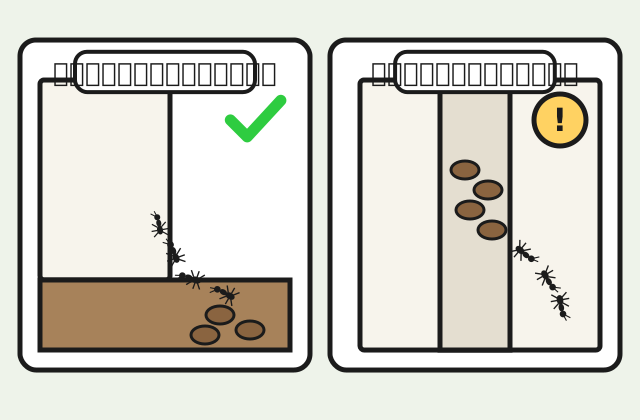
In most homes, yes, because ants in the kitchen are usually worker ants coming from a nest outside, in the garden soil, under pots or in cracks in a laundry area floor. Once the kitchen has no food within reach, no residue to smell and no open entry point, the colony stops sending a trail in. With every step done, you usually see the difference within one to two weeks.
The case where this is not enough is a nest inside the house, for example in a wall cavity behind kitchen cabinets, under a sink that stays damp, or in the ceiling above the stove. Signs include ants coming out of the same hole every night, winged ants appearing from time to time, or small piles of wood dust or soil. In that kind of home the no-chemical steps are still needed, because they keep the ants off food, but the nest has to be dealt with as a separate step.
It also helps to be clear about what "without chemicals" means here: no insecticide spray and no ant-killing powder in the kitchen. The dish soap used to wipe residue is something you already use on your plates every day, so we treat it as cleaning, not as pest control with a chemical.
Are the ants after sweet food or greasy food, and how can you tell?
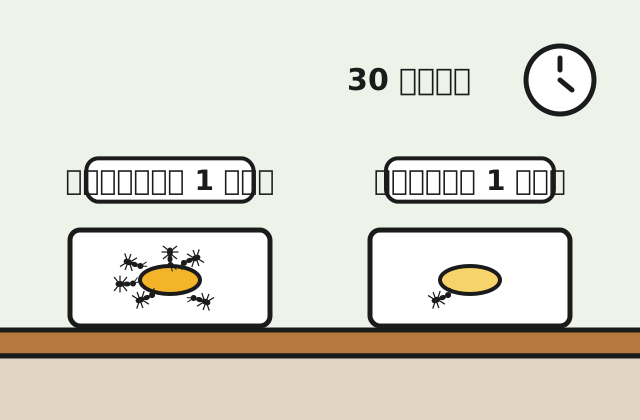
You can tell with a simple test. Put one drop of honey on one card and one drop of cooking oil on another, place both next to the ant trail and wait about half an hour. If more ants gather on the honey, they are currently looking for sugar. If they gather on the oil, they want fat or protein. The result tells you what to clean and store first.
This matters because every kitchen has different bait. Sugar-seeking ants go to the sugar jar, syrup bottles, unwashed coffee cups and fruit scraps. Grease-seeking ants go to oil splashes behind the stove, pans left to soak, fried scraps and pet bowls. A guide from Iowa State University Extension also explains that different ant species prefer different food, so knowing the species, or at least what the ants want, helps you choose the right method.
When the test is done, throw both cards into a tied rubbish bag straight away and wipe where they were. Do not leave them overnight, because a leftover drop of honey becomes bait that brings more ants. Some homes will find the ants like both about equally, which simply means you have to look after the sweet spots and the greasy spots at the same time.
Should you follow the ant trail before wiping it, and why?
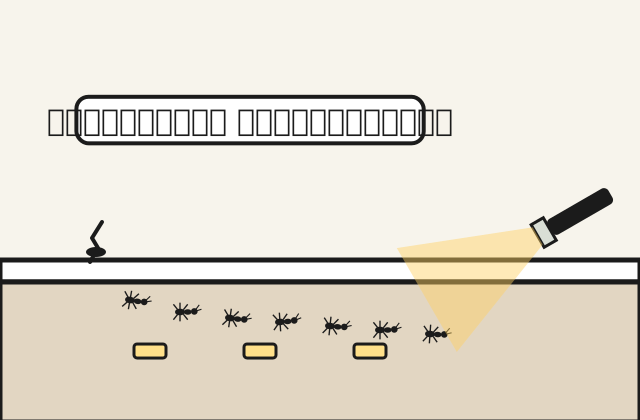
Yes, follow it first, because the trail is the map of how ants get into your kitchen. If you wipe it straight away, the scent trail disappears together with the clue, the ants spread out to look for new routes, and you never learn which gap to close. Spend ten minutes walking the trail backwards from the food to the point where the ants appear, and stick small pieces of tape along the way.
The easiest time to follow ants in the kitchen is after dark. Switch off the kitchen light and shine a torch low across the floor and walls, so each ant casts a clear shadow. Common entry points are the joint between skirting and floor, the hole where the waste pipe goes through the wall, gaps where the stove or fridge cable passes, the window frame above the sink, and the gap between the counter and the wall.
Once you find the entry point, close it with something that needs no chemicals, such as household sealant or silicone, aluminium tape around pipes, or fine mesh over a vent. Only then wipe the whole trail with water and dish soap. If the next day ants appear from a new spot close by, there is another gap you cannot see yet, so repeat the process.
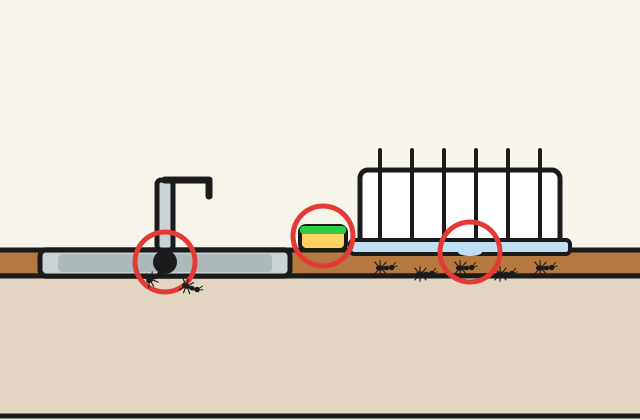
How do the sink, dish rack and drain attract ants in the kitchen?
The sink attracts ants because water and food scraps are in one place. Three spots are often forgotten: the drain strainer holding grains of rice, the dish sponge soaked with water, oil and sugar, and the drip tray under the dish rack that holds water all day. Each of these can feed and water ants even when the plates themselves are clean.
Empty the strainer every time you finish the dishes, squeeze the sponge and leave it on an open holder to dry rather than sitting in a dish of water, and tip out and dry the drip tray before bed. If your rack has no tray and drips straight onto the counter, wipe that spot too, because dried dishwater leaves a thin film of grease behind.
Also open the cupboard under the sink. If a slow leak has made the wood damp or swollen, it can become a nesting spot for some ants, so fix the leak and leave the door open to dry it out. A food-waste bin under the sink needs a lid and a tied bag every night.
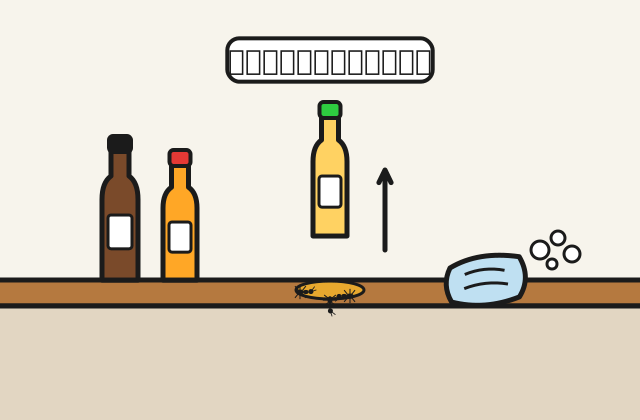
Where should you wipe sauce bottles and the grease behind the stove?
Wipe under each bottle and around its neck, because fish sauce, soy sauce, oyster sauce, oil and syrup run down the side of the bottle and dry into a sticky ring on the shelf. That ring smells both sweet and savoury, so ants gather even when the cap is tight. The quickest check is to lift every bottle: if the base sticks to the shelf or leaves a coloured ring, it needs wiping.
Use a cloth with warm water and a little dish soap on the base, the shoulder of the bottle and the shelf, then wipe again with plain water and dry it. After that, group the bottles you use most on one tray, so drips end up on the tray instead of the shelf and you can wash the whole tray at once. With a large oil bottle, wipe the spout every time you pour.
Behind the stove is where grease-seeking ants go. Oil mist from frying settles on the wall tiles, the edge of the hob and the gap between stove and counter. Wipe the wall behind the stove after every fried meal while the film is still soft, and pull a freestanding stove out once a month to clean the gap beside it. With a gas stove, always close the gas valve before moving it.
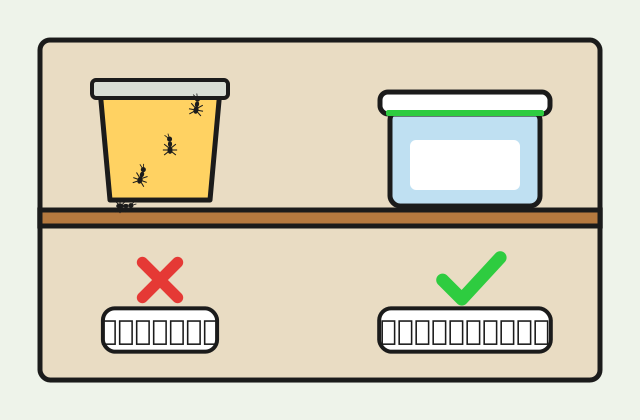
How should you store dry food in the pantry to keep ants out?
Move opened dry food into boxes with a rubber gasket around the lid, because bag clips, rubber bands and folded bag tops still leave gaps small enough for ants. Start with sweet and oily food such as sugar, cocoa powder, cereal, crackers, roasted nuts, snacks and dry pet food, since those are what ants in the kitchen look for first.
Wipe the shelves before moving anything, because spilled sugar and crumbs in the corners are what drew ants into the cupboard in the first place. If ants are already inside a bag, take that bag out first. Rice storage has its own moisture issues covered in ants in rice.
A good box does not have to be expensive. Check three things: a gasket that is still soft and not cracked, clips that lock on every side, and a rim without chips. Close the lid and press it; if it springs up or you can see light through a gap, it will not keep ants out. Screw-top glass jars work too, but wipe the thread every time you scoop sugar or honey.
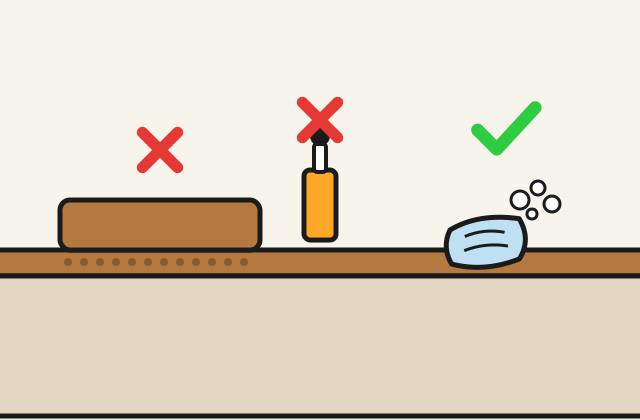
Why not sprinkle pepper or cinnamon, or drip essential oil, on the kitchen counter?
Because the counter is where food is prepared. A line of powder blows onto the chopping board, plates and the food you are cutting, and has to be laid again every time you wipe. These remedies also only mask the scent trail for a while, so ants tend to walk around the line within a few days. The result is not worth the mess on the one surface that most needs to stay clean.
Essential oils need extra care. Homes with cats should not drip essential oil on floors or counters where the cat walks and then licks its paws. If you want to know how each natural method works and which ones are fine away from food areas, see the detailed comparison in natural ant repellents.
The same reasoning applies to insecticide spray. The Iowa State University guide cited in topic 2 says clearly not to use insecticides where they may contaminate food or dishes. In the kitchen that leaves the safer option of wiping with water and dish soap, which removes both the food residue and the ants' scent trail, followed by plain water so no suds stay on the surface you cut food on.
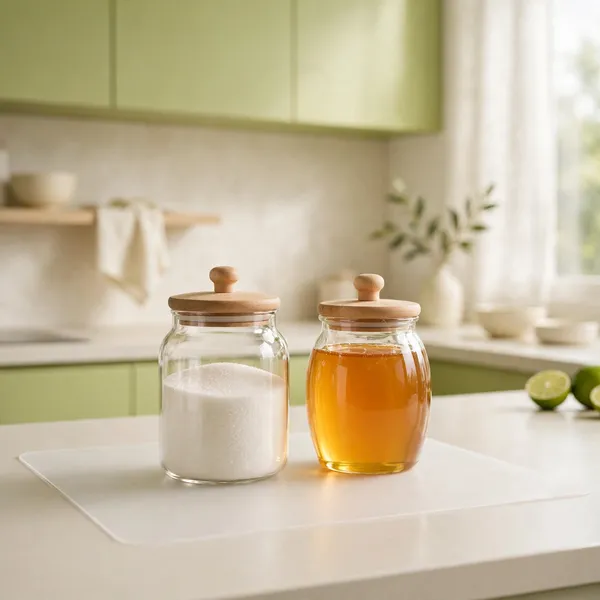
Where does an anti-ant pad help in the kitchen, and what should you know first?
An anti-ant pad helps where sweet or edible things have to stay out on the counter every day, such as a sugar jar, a honey bottle, a tray of sauce bottles, a fruit basket with a dish under it, or a pet bowl in the kitchen. The pad works by cutting off the path: ants stop at its edge instead of walking across to whatever sits in the middle, so nothing has to be sprayed on the counter.
Five things to know before you place it: it is ready to use out of the pack with no rinsing first, put the smooth side up, keep items at least 5 cm from every edge, so a 30x42 cm pad leaves a usable area of about 20x32 cm, do not put unwrapped food directly on the pad, and do not place it where it stays wet, next to a hot stove or in direct sun. Full placement tips are in how to use an anti-ant pad.
We also need to be straight with you: the pad is rigid plastic with a coated surface, and we are still waiting for the manufacturer's documents naming the coating, so we do not call it "chemical-free". What we can say is that it needs no spraying or sprinkling and nothing drifts onto food. Results show in about 1 to 7 days, and the pad does not kill the nest. The KAI67 anti-ant pad 30x42 cm costs ฿149 per sheet in both frosted white and clear white; safety questions are covered in is an anti-ant pad safe.
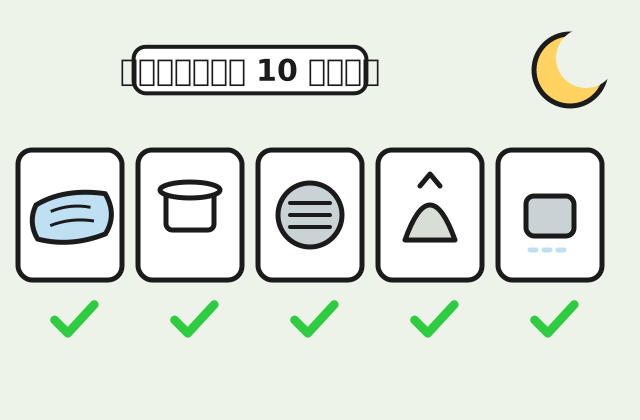
What should the 10-minute kitchen close-down include, and when should you change approach?
The close-down routine is what makes dealing with ants in the kitchen without chemicals actually work. It has five steps: wipe the counter and table with a soapy cloth, wash the dishes or leave them soaking in soapy water with no scraps, empty the drain strainer, tie the food-waste bag, and dry the sink and the dish-rack tray. It takes about ten minutes, and ants foraging at night find nothing to carry home.
Keep it up for at least two weeks, because worker ants remember the old route and come back to check for several days. Watch for small gaps in the routine, such as a coffee cup with a little left in it in the study, a cat bowl with leftovers, or an unwashed lunch box in a bag. If you live in a condo where ants come through pipes or from next door, read ants in a condo.
Change approach when you have done every step for more than two weeks but ants still come out of the same hole daily, or you see signs of a nest in the wall. The next step is closed ant bait stations on the floor along the trail, away from food areas and used strictly as the label says, or a pest control company.
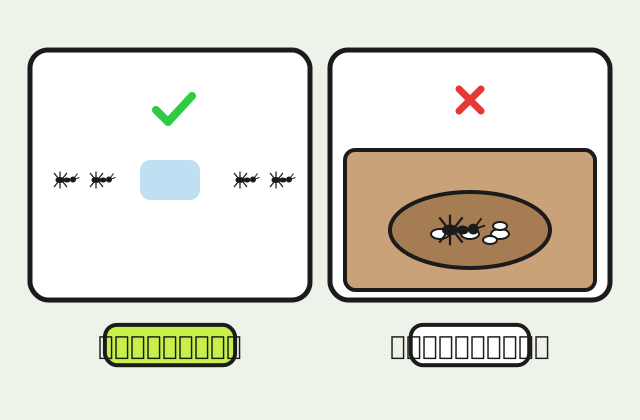
Does vinegar for ants actually work?
Yes, in the sense that it breaks the ant line and ants avoid the freshly wiped spot for a while. No, in the sense of getting rid of ants. Some ants hit directly by vinegar may die, but the workers out foraging are only a small part of the colony. A nest inside a wall, under the floor or in the soil outside stays intact and sends out new ants every day.
Posts claiming vinegar wipes out the whole colony usually describe day one, when the ants really did disappear because their old trail was erased. But if what drew them is still there, such as a sticky syrup bottle, a bin without a lid or a pet bowl, ants find a new route to it. Results look good at first and then fade.
The right way to think of it is as a cleaner for ant trails, much like wiping with water and dish soap, not as an ant killer. To reduce ants at the source you need something that reaches the nest, such as ant bait used as the label directs, or a pest control service when the nest is in the structure of the home.
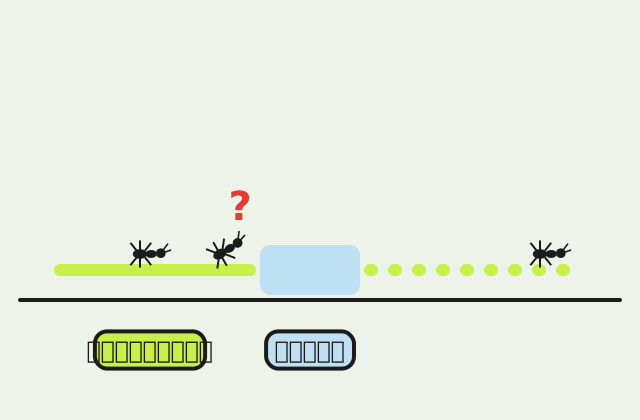
How does vinegar work on ants?
A worker that finds food lays a chemical line on the floor on its way back to the nest, called a trail pheromone. Other ants follow it until it becomes a line. Vinegar contains acetic acid and has a strong smell. When you wipe it over the route, the old scent is erased or masked, and ants arriving at that spot cannot pick up the line again.
This only happens where you wipe. If you wipe just the middle of the line, ants walk around it or lay a new trail beside it, so wipe the whole route from where ants come in to the food, and wipe a ring around the food spot rather than spraying a few dots. The vinegar smell fades as it dries; what lasts after that comes from the old trail having been wiped away.
Water with dish soap also erases the scent trail and has no sharp smell. The difference is that vinegar’s smell lingers for a while after wiping, so some people feel it lasts longer, but there is no evidence that one beats the other in an ordinary home. Choose based on the surface you will use it on and the smell your household can live with.
How should you use vinegar for ants so it works?
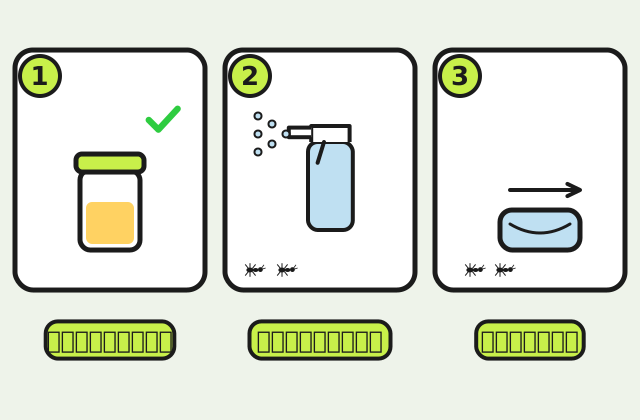
Start by removing what the ants are after: close the sugar jar, wipe the honey bottle, throw out scraps, then see where the line comes in. Dilute vinegar with water in a spray bottle, spray along the route from the entry to the food, then wipe along the whole line with a cloth. Wiping matters more than spraying, because it is what actually removes the scent from the surface.
Use clear distilled vinegar meant for the kitchen, not pickling vinegar with chillies or seasoned vinegar with sugar, because sugar and seasoning left on the floor become ant food instead. Check each brand’s strength on its label, and always test on a hidden spot first when using it on a new surface.
Repeat daily while you still see a line, and after every normal mop, because you need to erase any new trail the ants lay. When the line gets shorter day by day, putting food away and wiping the trail are working. If the line stays the same length every day, there is still food in the home that ants can find.
How long does vinegar for ants last, and when do ants come back?
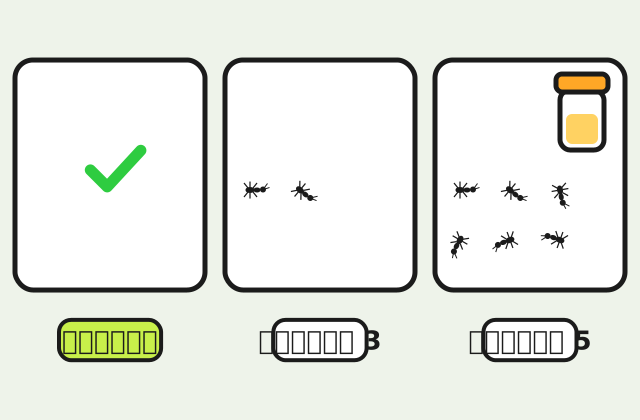
There is no confirmed figure. It depends on how thoroughly you wiped the route, whether the floor is mopped or wet often, the type of ant and, above all, whether there is still food for ants to find. The vinegar smell fades soon after it dries; anything that lasts longer comes from putting food away, not from the vinegar.
A home that has put food away and then wiped the trail with vinegar may see no ants for several days. A home that still leaves snacks or a pet bowl out all day may see ants back the same day by a new route. So judge the whole set-up, not which vinegar brand is stronger.
To find out what works in your home, change one thing at a time and note it down. Pick one spot ants visit regularly and photograph the line at the same time each day. On day one put the food away, the next day start wiping with vinegar, and see how much shorter the line gets. That tells you far more than a video filmed on day one.
Can you use vinegar on stone and wood floors?
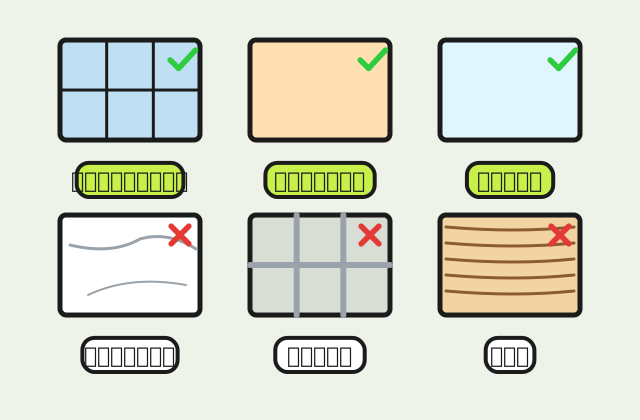
Mostly not. Never use it on marble, limestone, terrazzo or other natural stone containing calcium carbonate, because the acid reacts with the stone and leaves it dull, etched and permanently marked. See marble on Wikipedia for what the stone is made of. Sealed granite counters are also best avoided, as acid can slowly wear down the sealer.
Cement grout between tiles is another spot to be careful with. Wiping it with acid often can erode the grout into grooves, which then collect crumbs and become an ant highway instead. Oiled or waxed wood, bare wood and some laminate floors should not get vinegar either; check the floor maker’s cleaning advice first.
Surfaces that are fairly safe are glazed tile, plastic, glass and stainless steel, though wipe metal with plain water afterwards. Never spray vinegar into sockets, switches, appliances, laptops or phones, as it is a liquid that conducts electricity and corrodes.
Can you use vinegar for ants near cats, dogs and food?
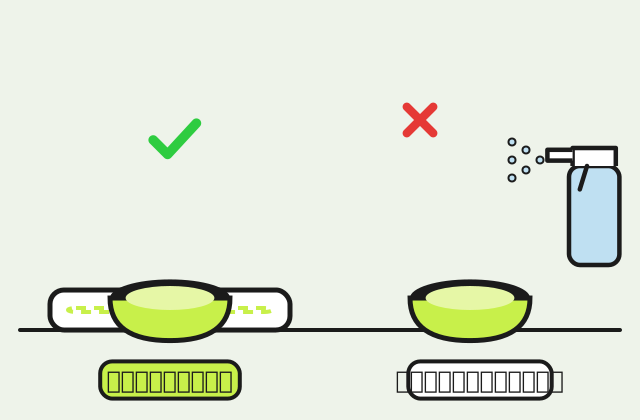
You can wipe the floor around them, but do not spray it into food bowls, water bowls or onto food. The strong acidic smell puts some animals off eating from that bowl, and mist sprayed near a pet’s face can irritate its eyes and nose. Wipe the floor around the feeding spot while your pet is elsewhere, then let it dry and the smell fade before putting the bowl back.
For cat and dog bowls that get ants every day, the approach that needs no smell or substance near the food is putting the bowl on an anti-ant pad, 5 cm from the edges as the manufacturer recommends, and wiping up crumbs around it daily. Everything about pet bowls is in ants in cat food.
If your pet licks a floor freshly wiped with vinegar and then seems unwell, for example vomiting, drooling a lot or acting lethargic, contact your vet. On tables where people eat, wipe with plain water after the vinegar before putting food down, so the smell and acid do not get onto dishes.
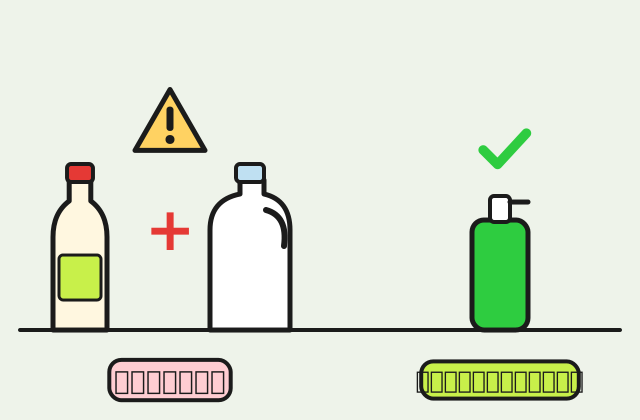
What can you mix vinegar with, and what must you never mix it with?
Never mix vinegar with bleach or any chlorine product, and never use them one after the other on the same surface without rinsing with plain water in between, because acid makes bleach release chlorine gas, which harms the airways. If you mix them by accident and smell something sharp, leave the room, open the windows and seek medical help if you have symptoms.
Mixing vinegar with baking soda, often shared as an ant remedy, foams up and neutralises the acid, so what is left is not stronger. It can scrub stains but adds nothing against ants. Adding a little dish soap, on the other hand, helps wipe greasy residue and still erases the scent trail.
Adding essential oils to vinegar to cover its smell needs care if you have a cat, as some essential oils are not suitable for cats. Use vinegar diluted with plain water only, label any spray bottle you mix clearly and keep it out of children’s reach.
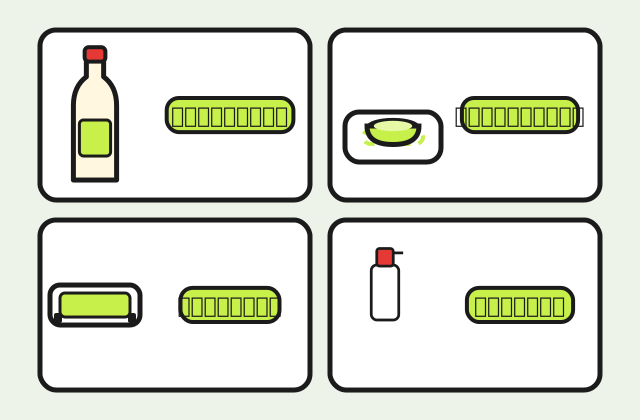
How should you combine vinegar with an anti-ant pad, bait or spray?
Each method does a different job. Vinegar erases trails and breaks the ant line for a while. An anti-ant pad stops ants reaching things standing on a flat surface, such as pet bowls and sugar jars. Ant bait lets workers carry it back to the nest. Spray kills the ants it touches and is best kept for real need, outdoors, away from food and as the label says.
In a home where ants come to the same spot every day, combining methods works better than one alone: wipe the trail with vinegar or soapy water, then put the food at that spot on an anti-ant pad, and add bait only if ants keep coming from the same nest. Be careful not to wipe vinegar over the spot where bait sits, or ants will not walk to it.
If you are choosing between vinegar and a herbal ant spray, both work in a similar way by disrupting the scent trail for a while. How to get the most from a pad is in how to use an anti-ant pad.